
5 Japanese Activewear Brands to Know
Goldwin, And Wander, Nanamica, Descente Allterrain and Snow Peak — the labels behind Japan's materials-first approach.

Theo MarshUpdated 9 min read

In This Story
In This Story
Key Takeaways
- And Wander, Nanamica, and Snow Peak are the three clearest Japanese athleisure starting points — outerwear-heavy, city-first technical style; Goldwin C3fit and Descente Allterrain lean performance instead.
- Goldwin holds The North Face trademark rights in Japan and South Korea; Descente is a separate company, not a Goldwin licensee.
- Japanese brand size charts often use different proportions than US or EU charts — measure in cm rather than assuming a fixed offset.
- Official brand sites are the main buy path; international stockists exist mainly for And Wander and Nanamica, with narrower selection and return rules than global mega-brands.
Japanese activewear has quietly built a distinct point of view: fewer logos, more attention to fabric behavior, a preference for understated color and cut over the loud branding common elsewhere. This guide is an editorial shortlist of five companies that show that approach well for international shoppers — what each one makes, how they differ, and where to buy them — not a scored ranking. Start with our sizing guide, athleisure vs performance explainer, or Goldwin vs And Wander vs Nanamica comparison if you already know the names and need the next step.
How we chose these five
We picked labels that (1) sell technical clothing with a materials-first reputation, (2) are realistically buyable outside Japan via brand e-commerce or stockists, and (3) together cover both city-first athleisure and performance training. We excluded fast-fashion activewear, logo-first streetwear, and treating The North Face Purple Label as a sixth standalone brand — Purple Label is a Nanamica collaboration for The North Face Japan, explained in our Purple Label guide and summarized under Nanamica below. This is not a wash-test or wear-test ranking; product notes come from brand materials, published size charts, and editorial comparison of intended use.
The five brands
- Goldwin — a Toyama-founded sportswear company (1950) that holds The North Face trademark rights in Japan and South Korea and designs market-specific TNF lines, while also running its own Goldwin and Goldwin 0 performance apparel and the C3fit compression line. The C3fit Compression Long Tights are a clear entry point into that performance side. (Descente is a separate Osaka sportswear company — not a Goldwin licensee.)
- And Wander — founded in 2011 by Keita Ikeuchi and Mihoko Mori, both formerly on Issey Miyake design teams. The brand applies hiking and mountaineering fabrics (ripstop nylon, Gore-Tex, technical fleece) to city-first silhouettes in a muted, tonal palette. The PERTEX wind jacket is a representative athleisure shell.
- Nanamica — a Tokyo label associated with Eiichiro Homma, best known internationally for The North Face Purple Label (designed with Goldwin's TNF Japan business) and its own Alphadry technical jackets, which pair minimal, workwear-adjacent design with weather-ready performance fabric.
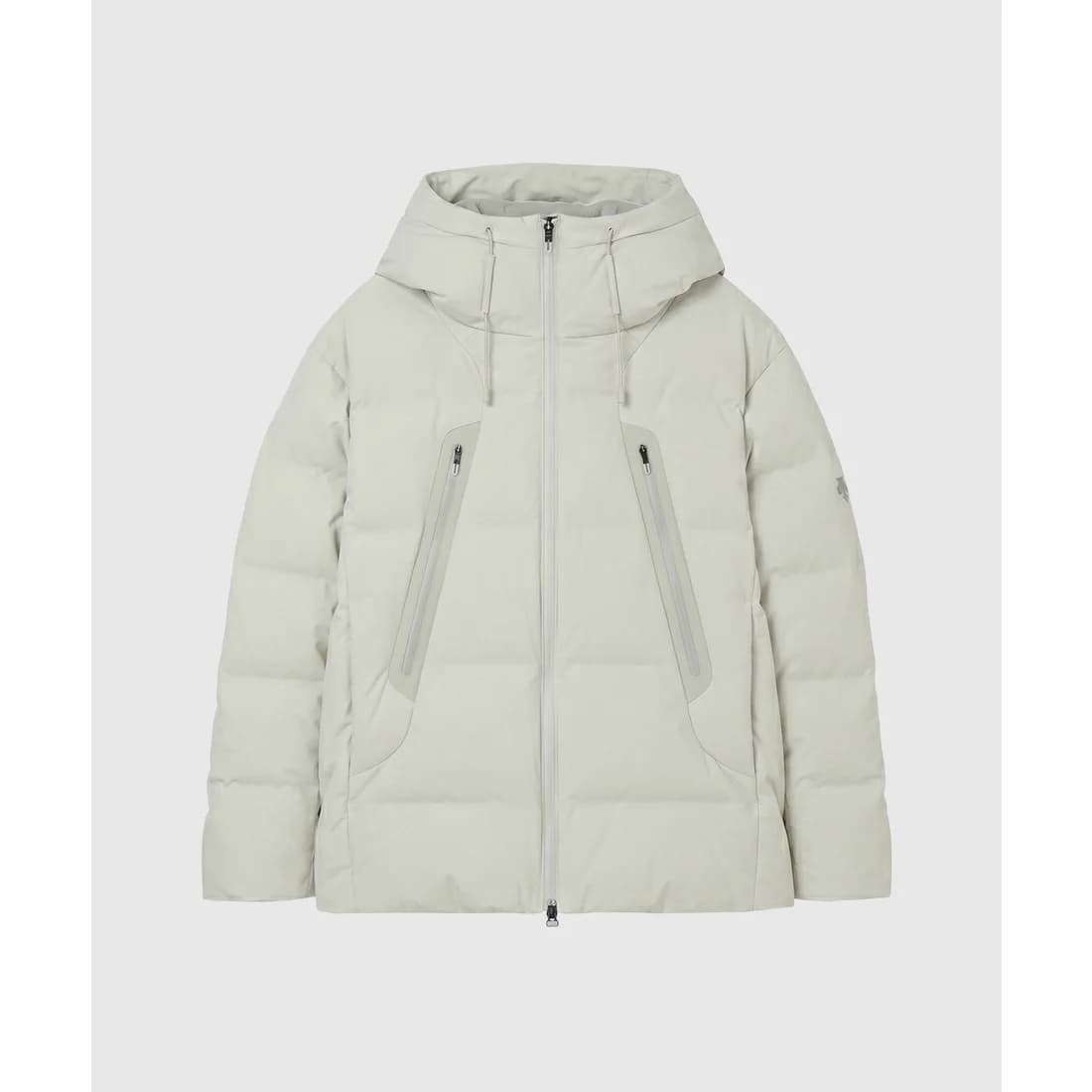
- Descente Allterrain — the design-forward technical sub-line of Descente, a Japanese sportswear company founded in 1935 in Osaka. Where mainline Descente focuses on team and ski sportswear, Allterrain is built for trail running, ski touring and technical training, with a more pared-back aesthetic than the parent brand. The HARD SHELL JACKET "CREAS"-L is a good example of the line's trail-ready shells.
- Snow Peak — founded in 1958 in Niigata as a mountaineering equipment company; its apparel line has grown into outdoor-and-training crossover wear rather than pure camping gear. The Flexible Insulated Zip Up Hoodie typifies the trail-to-town crossover.
Recommended Japanese athleisure brands
If you searched specifically for **Japanese athleisure brands** — city-first technical clothing you can wear after a walk, not race-day kit — start with three names from the list above. These are the clearest athleisure entry points in our shortlist; Goldwin C3fit and Descente Allterrain belong in the performance column instead (see athleisure vs performance).
| Compare | And Wander | Nanamica | Snow Peak |
|---|---|---|---|
| Best for | City-outdoor shells, tonal daily wear | Minimal outerwear, workwear-adjacent rotation | Trail-to-town insulation and crossover layers |
| Starter piece | [PERTEX wind jacket](https://mix.tokyo/products/5746921016) | [ALPHADRY Jacket](https://us.nanamica.com/products/new-york-alphadry-jacket-26ss) | [Flexible Insulated Hoodie](https://www.snowpeak.com/products/flexible-insulated-zip-up-hoodie-1) |
| Approx. price (Sep 2026) | ~¥42,000 | ~$217 USD | ~$138 USD |
Swipe sideways to see all columns.
- **Choose And Wander** if you want the most design-forward city-outdoor look — ripstop nylon, Gore-Tex shells, Issey Miyake alumni design language — and plan to layer under boxier outerwear.
- **Choose Nanamica** if you want understated daily outerwear with real fabric spec; add The North Face Purple Label if you specifically want TNF archive shapes with Nanamica tailoring.
- **Choose Snow Peak** if you want durable outdoor lifestyle pieces that read less fashion-forward than And Wander but still work in town — often the easiest crossover fit for layering.
None of these three optimize for studio leggings or compression running tights the way Western athleisure brands do. Japanese athleisure here skews **outerwear-heavy** — shells, fleeces, insulated hoodies — with materials (PERTEX, ALPHADRY, Pertex Shield) doing the technical work. Prefer a live community vote across Japanese and Western labels? See the athleisure brand ranking. For sizing before you import, use our Japanese activewear sizing guide; for checkout paths abroad, see where to buy outside Japan.
What each brand looks like
Product photos below are from each brand's official product page for the exact SKU linked in the list above — on-model shots where available, so you can see drape and proportion rather than flat-lay packshots alone.



What actually sets the approach apart
The common thread across these five isn't a shared aesthetic exactly, but a shared discipline: technical fabric development treated seriously, cuts that often read differently on Japanese size charts than on US or EU ones (so "size up one" is unreliable), and a preference for long-running core pieces over seasonal trend cycles. Three of the five — Goldwin, Descente and Snow Peak — also have decades of sportswear or mountaineering manufacturing behind them, which shows up as construction detail that newer, purely design-led activewear brands don't always match.
Oldest brand on this list
Descente, founded 1935
Nearly a century of sportswear manufacturing predates Descente Allterrain, its newer, design-forward technical line covered above.
Where to actually find them
Most of these labels sell through official e-commerce with some form of international or regional shipping — Goldwin America, And Wander via mix.tokyo, Nanamica US, Descente's store, and Snow Peak US are the usual starting points — but policies, duties, and which SKUs ship abroad vary by brand and season. And Wander and Nanamica also appear at a small number of specialty stockists overseas. Wide multi-brand distribution isn't really part of the model, which is part of the appeal and part of the friction: check each brand's size chart in centimeters and the return window before ordering. See where to buy Japanese activewear outside Japan for the practical path.
Frequently Asked
What are the best Japanese activewear brands to know?
A useful starting set for international shoppers is Goldwin (including Goldwin 0 and C3fit), And Wander, Nanamica, Descente Allterrain, and Snow Peak. Goldwin, Descente and Snow Peak each have decades of sportswear or mountaineering manufacturing history; And Wander and Nanamica are newer, design-led technical labels.
What are the best Japanese athleisure brands?
For city-first technical clothing, start with And Wander (city-outdoor shells and tonal daily wear), Nanamica (minimal Alphadry outerwear and [Purple Label](/article/the-north-face-purple-label-explained) collaborations), and Snow Peak apparel (trail-to-town crossover layers). All three skew outerwear-heavy rather than studio leggings. For running compression and measured training output, use Goldwin C3fit instead — see our [athleisure vs performance guide](/article/japanese-athleisure-vs-performance-activewear-explained).
Do Japanese activewear brands run smaller than US or EU sizing?
Not in a simple, consistent way. Charts and garment proportions often differ from Western expectations rather than mapping as a fixed offset. Measuring against each brand's published size guide in centimeters is more reliable than "size up one."
Can I buy Japanese activewear brands outside Japan?
Usually yes through official e-commerce (and, for And Wander and Nanamica, select overseas stockists), but shipping, duties, and return windows differ by label. Some SKUs stay domestic-only — confirm before checkout.
Sources
- Goldwin Inc. — investor overview (TNF Japan/Korea rights)
- Nippon.com — The North Face Japan / Goldwin background
- And Wander — about us (Keita Ikeuchi & Mihoko Mori)
- Descente Allterrain — brand site
- Snow Peak — brand site
- Goldwin C3fit Compression Long Tights, product page
- And Wander PERTEX wind jacket, product page
- Nanamica ALPHADRY Jacket, product page
- Descente Allterrain HARD SHELL JACKET "CREAS"-L, product page
- Snow Peak Flexible Insulated Zip Up Hoodie, product page
The Weekly
Movement, wellness, longevity and what we’re wearing — plus who’s moving on the athleisure ranking.
No spam. Just the good stuff.
By joining, you agree to our privacy policy.
Keep Reading


